Where Are All the Working Moms With Young Kids?
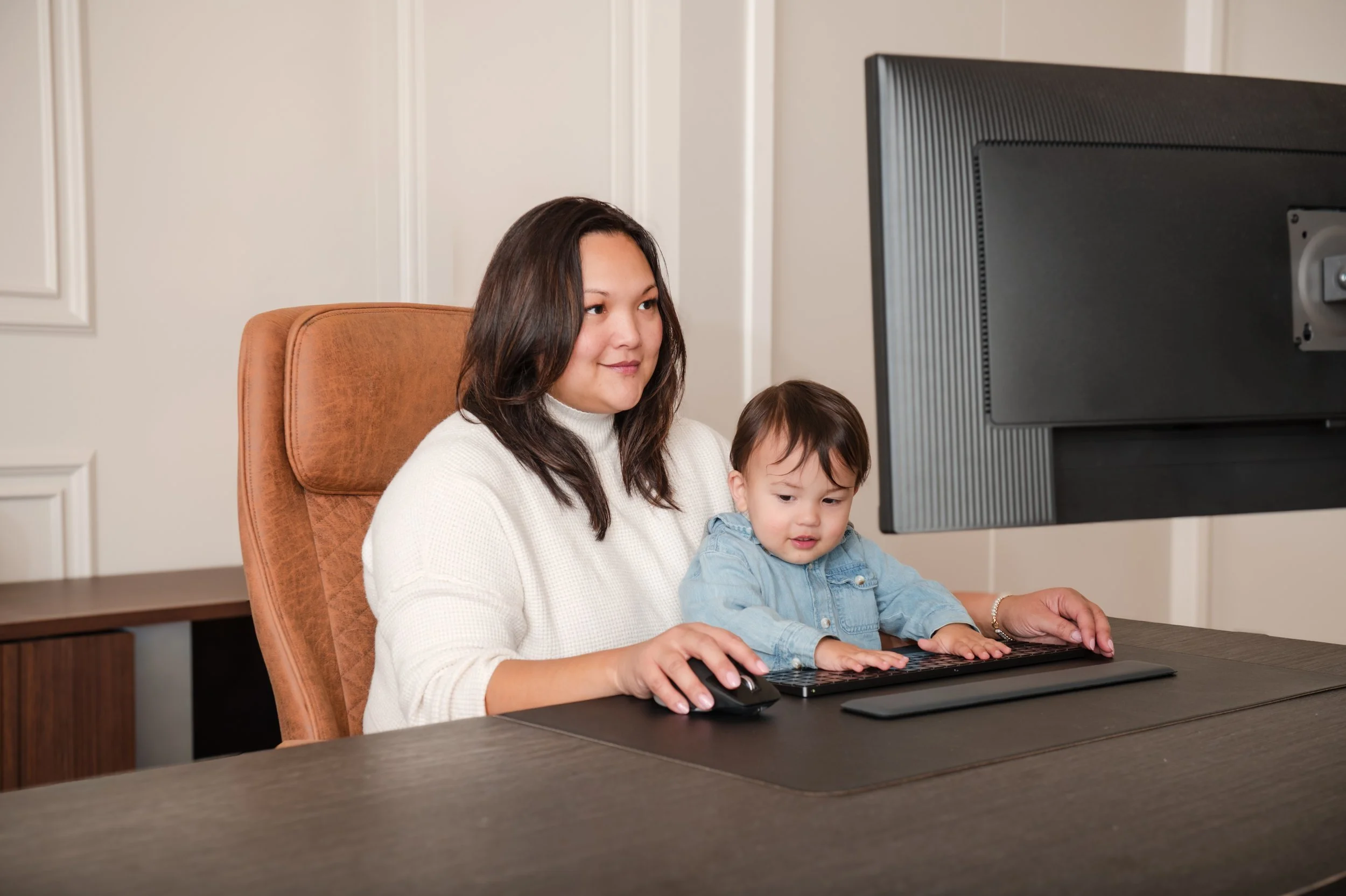
Where Are All the Working Moms With Young Kids?
It took 20 minutes to get my son to change his clothes.
Another 20 minutes for him to finish his breakfast.
Then another 20 minutes convincing him to get into his car seat—only to realize,once he was finally strapped in, that he had pooped.
So I got him back out of the car, brought him inside, changed him, put him back in the car seat and started the negotiation all over again.
And then my workday started.
This is such an ordinary morning when you have a toddler. But lately, it has me thinking about something much bigger.
Where are all the working moms?
Through Good Carma Consulting, I work with many different organizations and oversee HR functions that collectively touch hundreds of employees.
That gives me an interesting window into the workforce.
And I’ve started noticing something I can’t unsee:
I don’t see very many women with young children.
I’m not only talking about women in executive positions or senior leadership. We already know there is a significant drop-off in female representation as you move higher within organizations.
I’m talking about throughout the workforce.
I meet plenty of working fathers with young children. Often, they have a spouse who has chosen to stay home—and more power to those women and families.
But I don’t encounter nearly as many women who are in the same season of life that I am:
Building a career. Raising a toddler. Managing childcare. Trying to get everyone fed and dressed in the morning. Taking the 9 a.m. call. Building something professionally while also being responsible for a tiny human who absolutely does not care that you have a meeting in 15 minutes.
And I keep wondering:
Where did all the moms go?
The numbers back it up
What I’m noticing isn’t just anecdotal.
According to the U.S. Bureau of Labor Statistics, in 2025, only 68% of mothers with children under age 6 participated in the labor force. For fathers with children under 6, that number was 95.3%.
That’s a 27-point gap.
And as children get older, something interesting happens.
Among mothers whose youngest child was between 6 and 17, labor force participation increased to 78.2%.
So maybe the question isn’t whether mothers want to work.
Maybe we should be asking why the years when their children need them most are also the years when staying in the workforce can be so difficult.
We can talk about childcare costs, inflexible schedules, lack of paid leave, career penalties, burnout and the disproportionate amount of caregiving that still falls on women.
But I also think there’s a cultural piece that doesn’t get discussed enough.
Many workplaces were never really designed around the reality that great employees can also have complicated lives outside of work.
We still sometimes treat caregiving as an inconvenience employees need to hide.
The toddler meltdown before daycare.
The call that childcare fell through.
The parent who needs to leave for an appointment.
The employee caring for an aging mother or father.
We talk about these things as distractions from work rather than realities of the people doing the work.
Meanwhile, look at what we’re losing
Around 90% of the women on the Good Carma team are caring for someone—whether that’s young children, aging family members or both.
And working alongside them has reinforced something I already suspected:
If you want something done efficiently, ask a mother.
I’m only half joking.
Caregivers are some of the most resourceful people I know.
They prioritize because they have to.
They solve problems.
They adapt when plans change.
They know the difference between something that actually matters and something we’re spending three meetings overthinking.
And they don’t have time to drag their feet on projects.
When you have to finish the proposal, pick up a toddler, figure out dinner, remember tomorrow is pajama day and somehow locate the one stuffed animal your child suddenly cannot sleep without, you get very good at figuring things out.
Of course, those qualities aren’t exclusive to mothers.
But we should question a workplace system that makes it unnecessarily difficult for people with significant caregiving responsibilities to participate—because those are exactly the kinds of employees organizations should want to retain.
Flexibility doesn’t mean lowering the bar
This is where I think employers sometimes get it wrong.
Supporting working parents and caregivers doesn’t mean expecting less from them.
It means separating performance from presence.
Did the work get done?
Was it good?
Did they deliver what they committed to?
Are they supporting their team?
Are they helping move the organization forward?
Those questions tell me much more about someone’s performance than whether their morning went perfectly according to schedule.
Because sometimes it takes 20 minutes to get your toddler dressed.
Sometimes breakfast takes another 20.
And sometimes, after finally getting everyone into the car, you discover a diaper situation that sends the entire operation back into the house.
That doesn’t make someone unreliable, unambitious or less committed to their career.
It makes them a person with responsibilities outside of work.
The kind of workplace we’re trying to build
This is personal for me because it’s a big part of why Good Carma Consulting operates the way it does.
We’re an HR company, so of course we advise other organizations on their people practices.
But I also want us to demonstrate that another way of working is possible.
One where high expectations and humanity can coexist.
Where flexibility doesn’t mean a lack of accountability.
Where someone can be deeply committed to their career and deeply committed to their family.
Where caregivers don’t have to pretend the first part of their day didn’t happen before they opened their laptop.
And where talented women don’t eventually decide that leaving the workforce is the only way to make their lives work.
Our values at Good Carma—Collaboration Over Isolation, Sustainable Support, Integrity Through Structure, and Progress Over Perfection—aren’t supposed to be words sitting on a website.
They’re supposed to influence how we actually work.
Because I don’t want to keep looking around organizations and wondering:
Where did all the working moms go?
I want us to build workplaces where they have a reason—and a realistic way—to stay.

By: Cara Barnes